Well they’ve announced it! The new Steam Frame is about to rock the VR world. I’m super excited for this as I think any investment by companies into VR will only push the competitors to do better with the next. This bodes well for the Quest 4 that has been delayed. So, without further ado, let’s do a comparison about everything we know to compare the Steam Frame VS Meta Quest 3!


Overview
- Meta Quest 3 (launched Oct 2023) is a standalone all-in-one VR/MR headset from Meta Platforms. It supports full VR, mixed reality passthrough, uses internal hardware so you don’t have to tether to a PC (though you can).
- Steam Frame (announced Nov 12, 2025) from Valve/Steam is pitched as a premium standalone VR headset (with some PC-/Steam-library integration) and a direct competitor to Quest 3. It is announced for early 2026 release.
Key Specification Comparison
| Spec | Meta Quest 3 | Steam Frame |
|---|---|---|
| Processor / SoC | Qualcomm Snapdragon XR2 Gen 2 | 4 nm Snapdragon 8 Gen 3 Architecture: ARM64 |
| Memory (RAM) | 8 GB | 16 GB unified LPDDR5X |
| Storage | Up to 512 GB (128GB base); no microSD slot | Options 256 GB / 1 TB UFS; also has a microSD slot |
| Display resolution per eye | 2,064 × 2,208 pixels (LCD) per eye | 2,160 × 2,160 pixels per eye (LCD) |
| IPD Range | 58-71 mm (adjusted with dial) | 60-70 mm (adjusted with dial) |
| Power | Rechargeable 19.44 Wh Li-ion Battery | Rechargeable 21.6 Wh Li-ion battery. |
| Refresh rate | 72-120; 120 hz “experimental” 72 or 90 default | 72–144 Hz supported; 144 Hz “experimental” |
| Field of View (FOV) | ~110° horizontal x 96° vertical | ~110° horizontal × 110° vertical |
| Weight | ~515 g with stock head strap (3rd party head straps are much heavier) | ~435 g with stock head strap |
| Tracking | Hand and body tracking (Upper body tracking with leg position estimation) | Inside-out tracking via multiple cameras; passthrough and PC streaming capability. 2x interior cameras for eye tracking and foveated streaming |
| Passthrough | Dual 18 PPD color passthrough cameras | Monochrome passthrough via outward facing cameras |
| Speakers | Stereo speakers built into head set | Twin Driver Speakers. Two per side, built into head strap |
| Platform / Ecosystem | Quest OS / Horizon OS; access to Meta’s VR store + PC link. | SteamOS (Valve); runs Steam library (flat games + VR games) natively or via streaming. Linux |
| Price | $500 USD | TDB |
Strengths & Weaknesses – How They Stack Up
Meta Quest 3 strengths

- Colour mixed reality (MR) passthrough support and standalone VR.
- Great Pancake Lenses (especially when compared to previous generations)
- Great value for many users given performance vs. prior generations.
- Mature product: shipping now, broad software library and ecosystem established.
- Hand Tracking
- Well-supported with accessories, developer ecosystem.
Meta Quest 3 weaknesses
- Battery life is somewhat limited (~2 h) in heavy usage.
- Although very capable, some specs are now being challenged by upcoming rivals.
- Tethering or PC-link still needed for highest fidelity or PC VR games.
- Meta/Horizon Platform
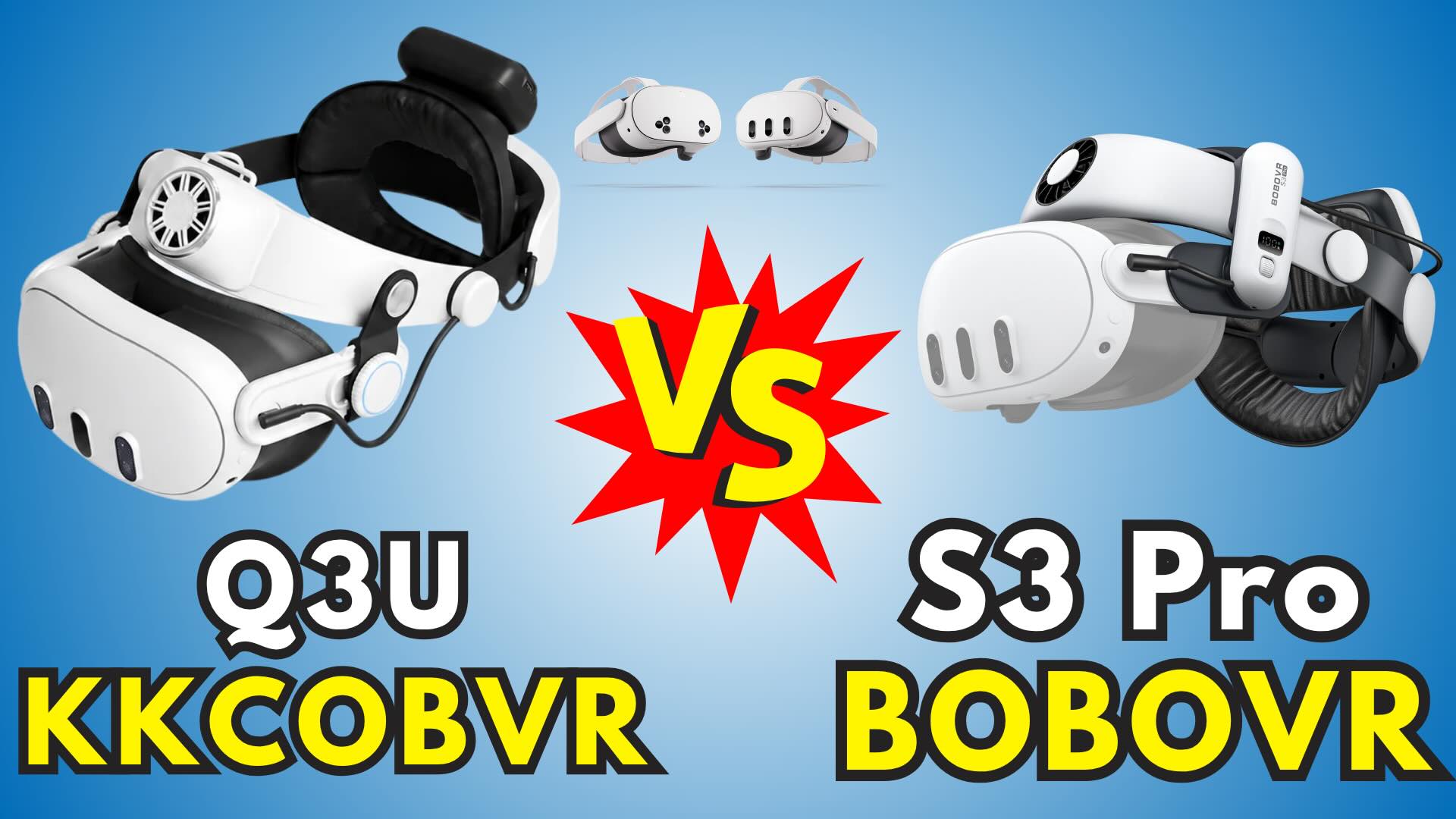
- Weight. Much heavier than the Steam Frame. This is especially the case when using heavier third-party head straps like the Bobovr S3 Pro.
Steam Frame anticipated strengths

- Spec bump: 16 GB RAM, high-end chipset, higher refresh rate potential, possibly more future-proof.
- Steam library access: ability to run PC games (flat or VR) natively or via streaming. That flexibility may be unique.
- Strong tracking, optics, and form factor reportedly optimized (pancake optics, lighter weight) – promising for comfort.
- Eye Tracking
- Foveated Streaming
- MicroSD storage expansion (useful for large libraries).
- High refresh rate target up to 144 Hz (experimental) could be a big win for high-end users.
- SteamOS ecosystem may appeal to “PC gamers” more than typical console/VR-only ecosystems.
Foveated Streaming
One of the big pros and improvements is the foveated streaming that is available because of the eye tracking capabilities of the Steam Frame. If you don’t know what foveated streaming is, here is a description:

Foveated Streaming is a new feature that optimizes detail where your eyes are looking, and typically offers over a 10x improvement in image quality and effective bandwidth. Behind the scenes, we’re using low-latency eye tracking data to steer the best quality pixels only to where you’re looking. This is all happening without you noticing, and works for your entire Steam library.
Steam Frame anticipated weaknesses / caveats
- Unsure about battery life for standalone so far. Will test that later.
- Price unknown at this point (likely higher than Meta’s current price) – may be a premium device.
- No hand tracking
- Black and white Passthrough
- Less accessory options for as head strap includes the battery and other components needed
Which Should You Consider?

It really depends on your priorities. Here are some scenarios where each of them might be the best buy for you:
- If you want a VR/MR headset now and value a mature ecosystem → Go with Meta Quest 3. It offers strong all-round value, plenty of content, and no waiting.
- If you’re a high-end / PC-gaming enthusiast and want the “next big leap” → Steam Frame is promising. If you can wait until launch (Spring 2026) and can accommodate higher cost, you might get more performance, more flexibility, and stronger future-proofing.
- If you play a lot of PC VR or want to run your Steam library “flat” games inside the headset → Steam Frame has an edge (by design) since it explicitly supports Steam content and possibly flat games natively.
Final Thoughts
In summary:
- Meta Quest 3 is the well-rounded, ready-to-go VR/MR headset with strong value and ecosystem.
- Steam Frame is shaping up to be a high-end powerhouse that tries to merge standalone VR + PC game streaming/compatibility + premium specs — but it’s not yet available and we’ll need to see how it performs in real life.
I’m really excited for the new Steam Frame to be released. I know I didn’t cover everything here. There is more to consider between the two but here are the major similarities and differences as we know them so far. The Steam Frame offers some great features that the Quest 3 doesn’t have. However, it lacks some abilities that the Quest 3 has. I honestly did expect a little more from the Steam Frame to begin with. I thought it was going to blow the Meta Quest 3 out of the water. But as we can see so far, it is tailored to specific types of gamers and will just be a competitor and not a leader in my opinion, However, as I said before, the development of the Steam Frame will only push VR to the next level and force Meta to be even better with the Quest 4.
What are your thoughts on this? Will you look into getting a Steam Frame? Or will you stick with the Meta Quest 3? Let’s hear your thoughts below!